ChatGPT shopping: how Shopify products get recommended in ChatGPT
ChatGPT now answers shopping questions with product cards, prices and links to stores. Shopify can put your catalog in front of it without a separate feed, but which products ChatGPT recommends depends on how well your product data answers the question. How products get into ChatGPT, how they are picked, and what to fix in a Shopify catalog.

Mathias JensenCEO & founder
In short: ChatGPT shows product recommendations when someone asks a shopping question, with images, prices and links to the stores that sell them. Shopify sends its merchants’ catalogs to ChatGPT through Shopify Catalog, so a Shopify store is usually eligible without extra feed work. Being eligible isn’t the same as being picked. ChatGPT first chooses the products that best fit the question, then the merchants to show for each product, and both steps depend on complete, consistent product data.
What ChatGPT shopping is
Ask ChatGPT for “a vase that works for dried flowers, under €60” and the answer can include a short list of products, each with an image, price, a summary of why it fits and a link to buy. For bigger decisions, its shopping research feature asks follow-up questions and builds a buyer’s guide that compares options.
An AI assistant recommending the Ro Bottle Vase from Lerko Studio for dried flowers, with its material, height and opening
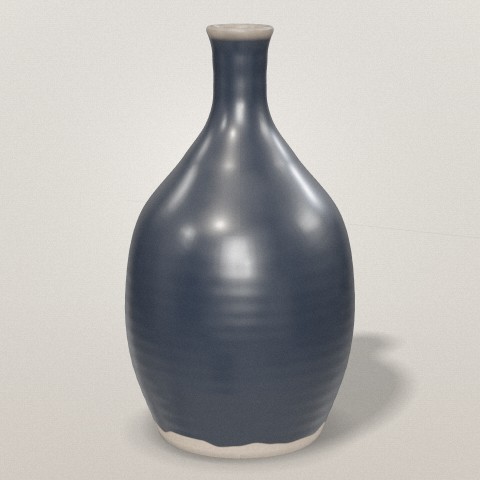
OpenAI states that these organic results are chosen independently and are not ads. Paid placements are a separate product.
How products get into ChatGPT
- Shopify stores: Shopify Catalog syndicates your products, and the Agentic Storefronts channel in the Shopify admin shows which AI platforms receive them. It is active by default for eligible stores, and platforms and checkout options vary by market, checked against the Shopify Help Center on 24 November 2026.
- Other platforms: merchants can apply to OpenAI to share a product feed with fields such as ID, title, description, link, brand, image, availability and price.
- The open web: ChatGPT’s search crawler (OAI-SearchBot) and search partners such as Bing also find product pages, reviews and articles.
The feed gets a product considered. The quality of the product data decides whether it is chosen.
How ChatGPT picks products, and then merchants
Based on what OpenAI has published and what can be observed, selection happens in two steps:
- Which products fit? ChatGPT matches the request, and what it knows from the conversation, against product information: the type of product, its attributes, materials, dimensions, use cases, price range and reviews. Products whose facts aren’t stated can’t be matched.
- Which merchants to show? For each product, ChatGPT ranks the stores that sell it on signals such as availability, price, quality and whether the merchant is the brand or main seller.
That makes it a product data contest. Two stores can sell the same jacket, and the one whose product page states the waterproof rating, weight and fit gets mentioned when someone asks for exactly that.
What to fix in your Shopify catalog
| Data | Why ChatGPT needs it | Where it lives in Shopify |
|---|---|---|
| A specific title | To know exactly what the product is | Title and product type |
| Attributes | To match stated needs such as size, material or capacity | Category metafields and custom metafields |
| Use cases | To answer “is it good for…” questions | Description and metafields |
| Brand and GTIN | To connect the product to reviews and other sellers | Vendor and variant barcodes |
| Price and availability | To avoid recommending what can’t be bought | Variants and inventory |
| Images | For the product card, with ALT text describing them | Media |
| Shipping and returns | To compare total offers | Shipping settings and policies |
Then test it: ask ChatGPT the questions your customers ask, in every language you sell in, and note where competitors are named and you aren’t. The missing facts are usually obvious.
ChatGPT, Google AI Mode and Perplexity
The same data serves all of them. Google’s AI Mode and AI Overviews draw on the Shopping Graph and Merchant Center, Perplexity on its own index and merchant partners, and Microsoft Copilot on Bing. Shopify’s Agentic Storefronts channel connects to several of these platforms at once. A catalog that answers questions with specific, consistent facts does well everywhere. For the broader discipline, see the guide to generative engine optimization.
ChatGPT shopping checklist
- Check agentic storefronts in your Shopify admin: it is active by default for eligible stores, and ChatGPT requires your products to be eligible for Shopify Catalog and your store policies to be complete.
- Set the Shopify product category on every product.
- Fill the attributes customers ask about, per product type, as metafields.
- Rewrite titles and descriptions so they answer real buying questions.
- Add GTIN, brand and MPN to every variant.
- Keep price, stock and variants accurate in every market.
- Make sure OAI-SearchBot and Bingbot can crawl your store.
- Track sessions from chatgpt.com in GA4 and test your key questions monthly.
ChatGPT shopping is one part of a bigger shift towards agentic commerce, where AI agents compare and act on behalf of shoppers.
How Covada makes products ChatGPT can recommend
Covada researches every product in your catalog and fills the facts that shopping answers depend on: attributes, materials, dimensions, use cases, identifiers and ALT text, each with a confidence score and the reasoning behind it. Titles and descriptions are written around what shoppers actually ask, in every market’s language, and the same facts reach every store. With Flows, new products are complete before they go live.
Frequently asked questions
How do I get my Shopify products into ChatGPT?
Shopify syndicates merchants’ products to ChatGPT through Shopify Catalog and its Agentic Storefronts channel, so most Shopify stores don’t need a separate feed. Check the channel in your Shopify admin to see what is active for your store and markets.
Can I pay to rank in ChatGPT shopping results?
OpenAI says organic shopping results are chosen independently and are not ads. Paid placements, where available, are a separate product and are labelled as such.
Why does ChatGPT recommend a competitor’s product instead of mine?
Usually because the competitor’s product data answers the shopper’s question more clearly: the attributes are stated, the facts are consistent, reviews and other sources back them up, and the product is in stock at a clear price.
How can I see traffic from ChatGPT?
In GA4, look for sessions with chatgpt.com as the source. ChatGPT often adds utm_source=chatgpt.com to the links it shows.
Does ChatGPT shopping work in Europe?
Shopping answers are available in many countries, while some merchant and checkout features started in the US. Your product data needs to be complete in every language you sell in either way.